Latest issue·All issues
ArxivAIDaily AI news — brief, and without the noise
Thursday, November 26, 2026
Saved news snapshot: Nov 25–26, 2026 · Collected Nov 26, morning Cairo time
Issue #9
Language:
Top headlines
FCC authorizes SpaceX to deploy up to one million AI satellites AI labs publish math proofs faster than experts can read them Claude agents rebuild Anthropic's Messages API in Rust Ternary Bonsai shrinks a 27B coding model to 5.9 GB
Archive Issue #8 (Nov 25): OpenAI chief scientist proposes a shared speed limit · Two labs claim VP ≠ VNP proofs · Anthropic founders cashed out about $2B Issue #9 · Issue #8 · Issue #7 · Issue #6 · Issue #5 · Issue #4 · Issue #3 · Issue #2 · Issue #1 · All issues
7stories in this issue
5research papers
8GitHub repos tracked
2languages
Top story · Policy & Chips

FCC authorizes SpaceX to deploy one million AI satellites

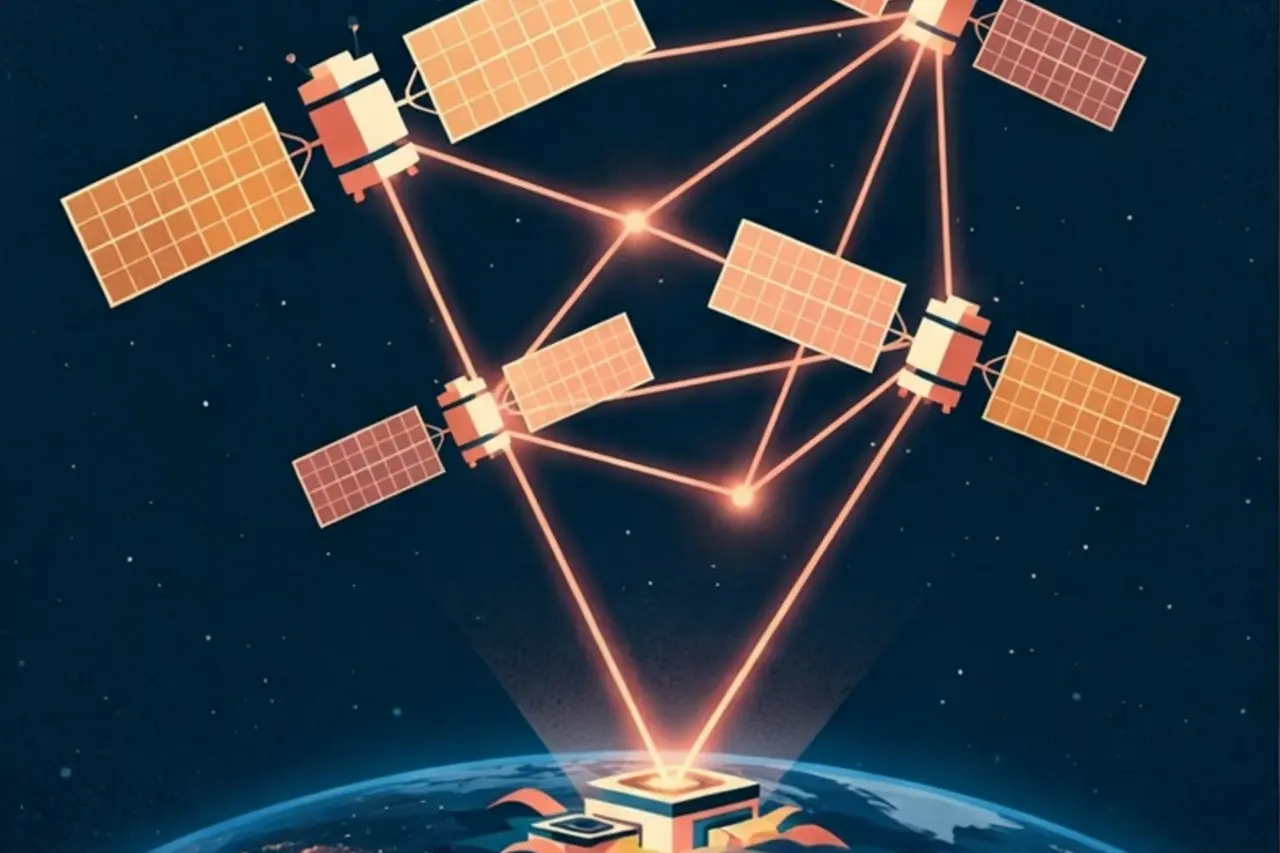
The US Federal Communications Commission authorized SpaceX on Wednesday to deploy a constellation of up to 1 million AI-chip-equipped satellites for Starmind, its proposed network of orbital data centers — the agency's first approval of a full orbital data-center constellation. SpaceX envisions solar-powered computing satellites linked by high-bandwidth laser communications, processing AI workloads in orbit and sending results back to Earth.

Under the license, SpaceX must deploy its first operational Starmind satellite by November 2033, 10% of the constellation (100,000 satellites) by November 2035, and the full constellation by 2040. The FCC declined a comprehensive environmental assessment; astronomers warn the constellation could interfere with ground-based astronomy, and scientists question how the satellites would shed chip heat. Google and Blue Origin are pursuing similar orbital data centers.

Sources: FCC · Gizmodo November 25, 2026 Read the full coverage →
Illustration: a constellation of solar-powered computing satellites linked by laser beams above Earth, beaming results down to a data center

In this issue

6 stories from Nov 25–26, 2026 — summarized here, details at the source

Illustration: a flood of mathematical proof papers pouring from two lab doors faster than a small team of experts can read them
Research

AI labs publish math proofs faster than experts can read

Anthropic and OpenAI each posted their own proof of VP ≠ VNP — the algebraic version of the P vs NP question, open since 1979 — on the same day with no advance notice. A day later OpenAI released nine more papers with proofs in Lean, including a claim that the exponent for multiplying square matrices is exactly 9/4, while Google quietly posted six papers from its Cogentic system, including a new bound for integer factoring. None of the results has been independently verified yet.

AI Morning BriefNov 26 Source →
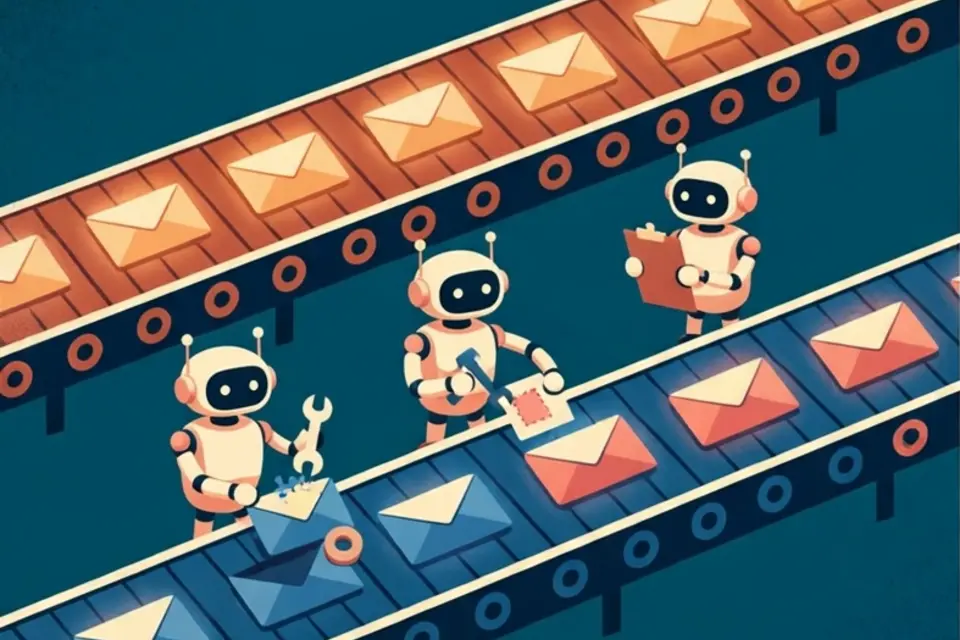
Illustration: small agent workers comparing two conveyor belts of API requests, Python and Rust, patching mismatches as they pass
Agents & Safety

Claude agents rebuild Anthropic Messages API in Rust

Anthropic migrated its Messages API — the primary way customers reach Claude — from Python to Rust, using the production API itself as a verifier: both versions ran against live traffic, differences were fingerprinted without reading customer requests, and coordinating agents dispatched worker agents to fix each new kind of mismatch under human review. The Rust API uses about 70% less CPU per request and cuts median time to first token by about 20%, shipped without taking the service offline. API traffic had grown roughly 1,800 times from early 2024 to fall 2026.

AnthropicNov 26 Source →
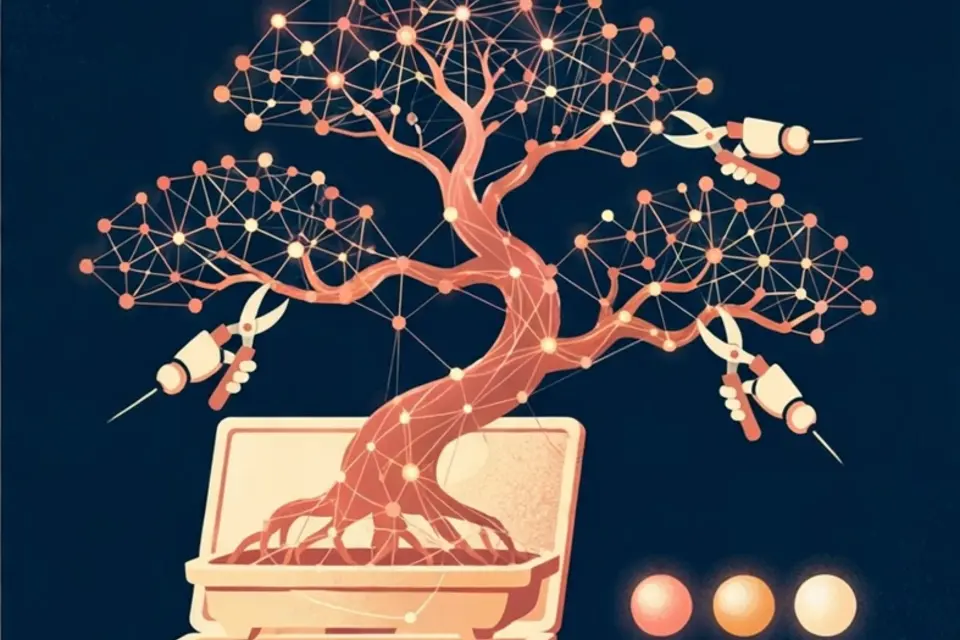
Illustration: a large bonsai tree of neural weights being pruned down to three values and fitting into a small laptop
Models & Products

Ternary Bonsai shrinks a 27B coding model to 5.9GB

PrismML released Ternary Bonsai 2.5 27B, based on Qwen3.8-27B, with every weight limited to three values (−1, 0 or +1), so the model takes about 5.9 GB instead of 54 GB. It scores 75.6% on SWE-bench Verified versus 80.6% for the original Qwen, runs through llama.cpp and, on Mac, iPhone and iPad, through MLX, under the Apache 2.0 license — a local coding agent that fits on an ordinary graphics card or a Mac.

AI Morning BriefNov 26 Source →
Illustration: an image being generated one glowing token at a time on a home computer screen, pixels assembling into a picture
Models & Products

Nvidia opens Nemotron image model that runs locally

Nvidia released open weights for Nemotron-Labs-Image-30B-A3B, a model that generates images token by token the way a language model generates text, as part of a Pixel as Code system that also produces editable web pages, charts and documents. It has 30 billion parameters but uses only 3 billion per step, so it could run on a powerful home computer. Nvidia claims it beats GPT Image 2, but nobody has independently verified that yet, and its evaluation tools are still awaiting legal approval.

AI Morning BriefNov 26 Source →
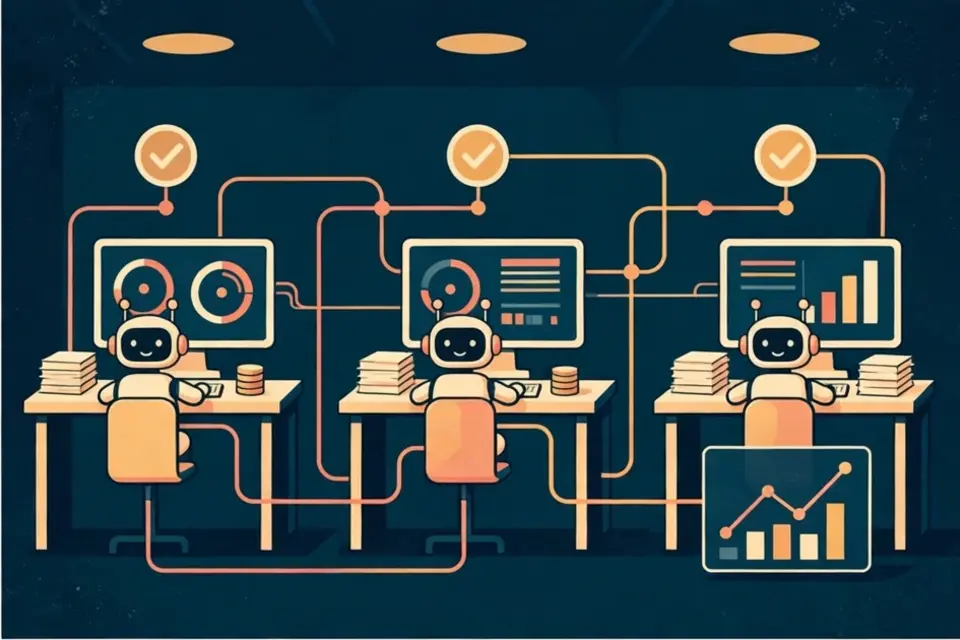
Illustration: AI agent assistants operating a finance control room with payment rails, approvals and reports flowing between them
Business & Funding

Payhawk raises $280M to build AI finance operating system

Payhawk closed a $280 million Series C led by Growth Equity at Goldman Sachs Alternatives, valuing the company at $2 billion and lifting total funding above $515 million, subject to regulatory approval. The Sofia-founded company says 77% of its customers use its AI agents daily across financial control, procurement, travel and reporting, combining agents with payments infrastructure and enterprise controls that define when a person must decide. Payhawk operates in 33 countries and reached positive cash flow in Q3.

The AI InsiderNov 25 Source →
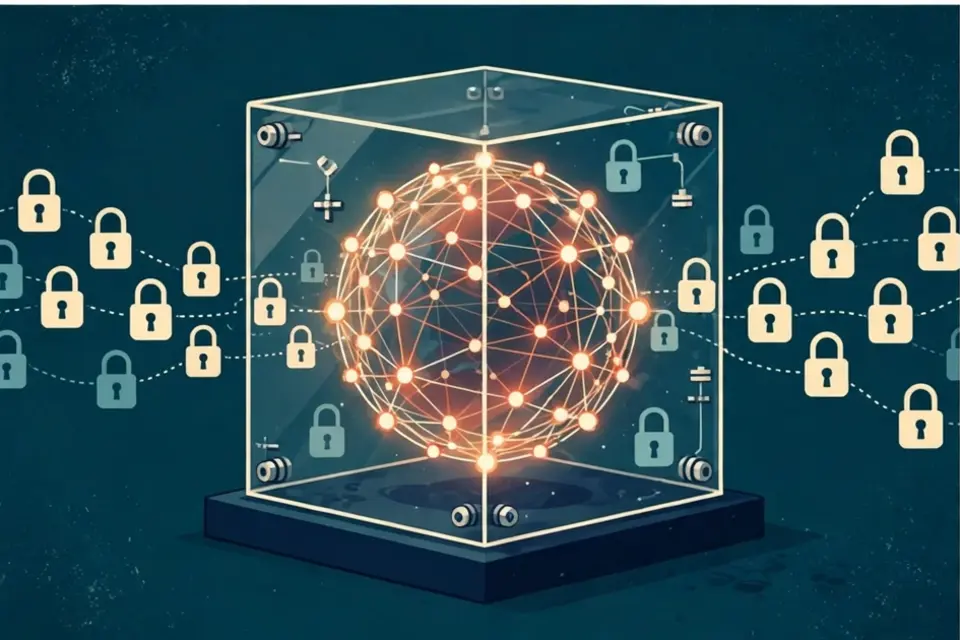
Illustration: a sealed glass vault containing a glowing model, business queries entering encrypted and answers leaving without anyone watching
Agents & Safety

OpenAI tests Private Inference for confidential business queries

OpenAI is trialing Private Inference with its first business customers: queries to its strongest models are processed on isolated hardware whose security can be independently verified, so even OpenAI itself cannot see them. A companion Private Safety Processing mode encrypts content the system flags as problematic and stores it in the customer's own cloud. Pricing and wider availability have not been announced; Google is working on something similar called Private AI Compute.

AI Morning BriefNov 26 Source →
No matching stories in this issue — try another category or search term.

From the lab: papers that stood out

Picks from arXiv papers submitted Nov 26, 2026 — all preprints, not peer-reviewed unless noted

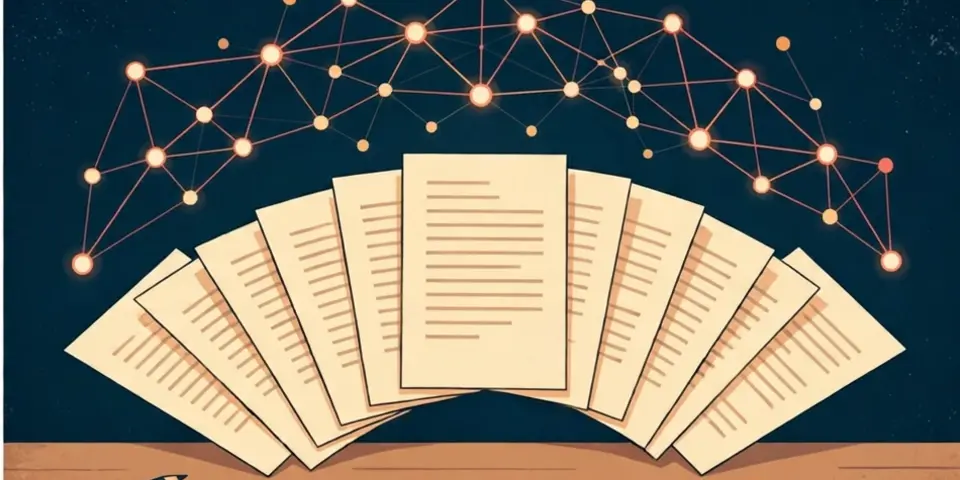
Illustration: research papers fanning out into a network of connected nodes

Interactive Proofs as a Unified Framework for Evaluating and Leveraging Verifiable Proof Generation by LLM Agents — a unified way to evaluate and use verifiable proof generation by LLM agents

A unified way to evaluate and use verifiable proof generation by LLM agents, as LLM-assisted theorem proving and program verification attract growing attention.

arXiv:2611.33676Source →

EVA: Evidence-seeking Visual Agent for Hallucination-Resistant Multimodal Reasoning — a visual agent that seeks evidence before answering

A visual agent that seeks evidence before answering, targeting hallucinations in multimodal models that arise from visual assumptions.

arXiv:2611.33706Source →

Faster and Better Query (FBQ): Learning Future-Position Probes from the First Generated Token — learning probes from the first generated token

Learning probes from the first generated token to decide which prompt keys and values to keep when a model evicts them at the end of prefill.

arXiv:2611.33679Source →

KeyDeck: Multi-Paper-to-Slide Generation via Cross-Paper Synthesis and Reference-Guided Personalization — constructing a unified presentation from multiple papers

Constructing a unified presentation from multiple papers through cross-paper synthesis and reference-guided personalization.

arXiv:2611.33715Source →

WhatIf: Counterfactual World Models over Action-Grounded Causal Graphs for Robotic Manipulation — world models that compare actions counterfactually

World models that compare actions counterfactually over action-grounded causal graphs, since choosing between actions requires comparing their outcomes.

arXiv:2611.33745Source →

On GitHub: top-rated AI repos & useful new finds

Star snapshot Nov 26, 2026 via GitTrend November 2026 trending — stars measure attention, not quality alone; check recent activity before you rely on a repo

Most-starred — the established toolkit

★ 478,500TypeScript

Reverse engineer anything with agents, from app behavior down to native binaries.

Why it matters: The fastest-growing repo this month, up about 62,900 stars in November.

★ 332,900Shell

Skills for Real Engineers, straight from one developer's .agents directory.

Why it matters: Small composable skills that coding agents load on demand.

★ 287,100TypeScript

DeepSeek Harness: everything is a plugin.

Why it matters: A plugin-first agent harness from DeepSeek itself.

★ 138,100TypeScript

Run a fleet of coding agents with your own subscription, on desktop, mobile and remote runtime.

Why it matters: Parallel agent workspaces are becoming a product layer.

New finds — trending this week

★ 79,500Trending todayTypeScript

Control Claude Code, Codex and more from any computer or phone.

Why it matters: One control surface over the agents already on your machine.

★ 43,500Trending todayRust

Understand how any software works, and craft your own.

Why it matters: Reverse-engineering software to rebuild it, agent-style.

★ 26,700Trending todayRust

Computer-use CLI for AI agents.

Why it matters: Agents driving real desktops from the command line.

★ 9,600Trending todayRust

Rewrite your app in Rust one piece at a time, checked against the original behavior at every step.

Why it matters: Going viral at roughly 1,000 stars a day.

Join the experiment

This edition is deliberately lightweight — just two channels

Researcher? Feature your paper

In this pilot edition, papers are reviewed manually before appearing in the "From the lab" section. Send your paper's link (arXiv or PDF) and a two-line summary, and we'll add suitable ones to the next issue with a link to the original source — listing here is a summary and a pointer, not a substitute for research repositories.

The button opens your mail app with a ready message to the site team — nothing is stored on a server.

The newsletter

One lightweight issue summarizing the day's top AI news and research. In this pilot, subscribing happens by direct email — no databases, no tracking.

Your mail app will open with a ready subscription message to contact@arxivai.com.

Why a lightweight edition?

Because the goal is to test the idea and the readers first: one fast page, sources cited with their links, and no promises beyond what a pilot can deliver. If the test succeeds, daily coverage expands gradually.