Latest issue·All issues
ArxivAIDaily AI news — brief, and without the noise
Sunday, November 22, 2026
Saved news snapshot: Nov 21–22, 2026 · Collected Nov 22, morning Cairo time
Issue #5
Language:
Top headlines
Microsoft puts Aion Instruct inside Edge and trials on-device AI for websites ChatGPT dots arrive in Apple CarPlay OpenAI use at US national labs grows 20-fold in a year Cloudflare chief warns AI-found flaws could mean two years of outages
Archive Issue #4 (Nov 21): Claude helped prove the Riemann hypothesis — but nobody can read the proof · Anthropic slides 8.5% on day two · Inkling 2 Mini loops its layers Issue #5 · Issue #4 · Issue #3 · Issue #2 · Issue #1 · All issues
7stories in this issue
5research papers
8GitHub repos tracked
2languages
Top story · Research

The Riemann proof passed its machine check — 17 million lines certified correct

Lean FRO and the Mathlib Initiative have certified Levent Alpöge's Lean formalization of the Riemann hypothesis correct. The 17-million-line codebase passed compilation checks in one day, and five core theorems rest on only three standard axioms. The claim Alpöge made with Claude on November 20 now has a machine verdict: the proof compiles and is certified.

The rival human-authored draft from Stanford postdoc Alessandro Masullo remains uncertified, and mathematicians caution that certification is not the same as understanding: the argument is still unreadable to humans, and months of scrutiny lie ahead before either proof is accepted.

Sources: AITNT · AI.info November 21, 2026 Read the full coverage →
Illustration: thousands of glowing lines of formal proof code streaming across a dark background and resolving into a golden spiral of prime-number dots

In this issue

6 stories from Nov 20–22, 2026 — summarized here, details at the source

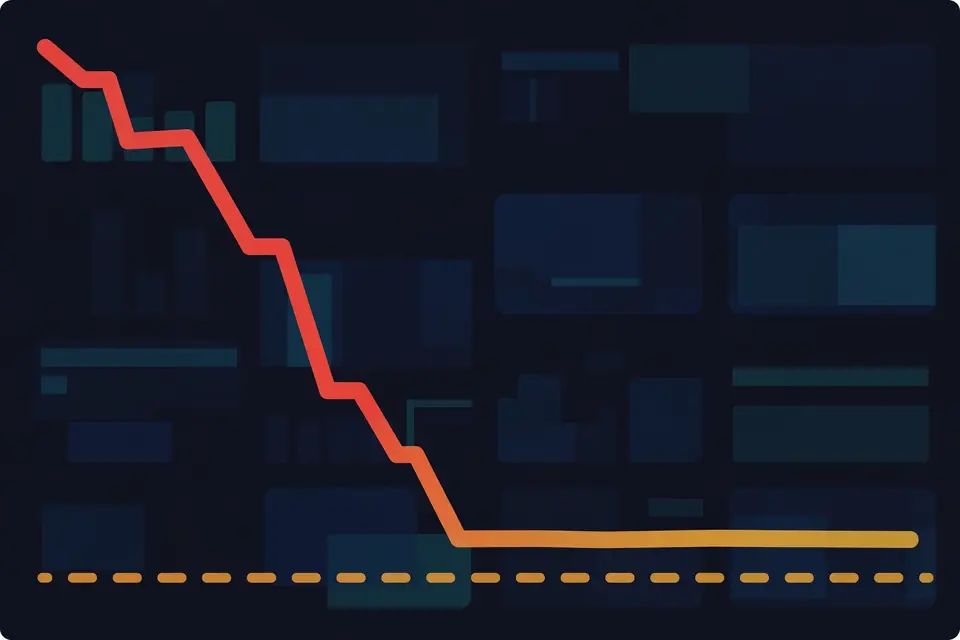
Illustration: a stock chart falling steeply and flattening just above a dashed floor line, with trading screens behind it
Business & Funding

Anthropic ends week one at $88.91 — below every analyst target

Anthropic closed its first week of trading at $88.91 on Friday, November 20, down 8.5% from Thursday's $97.17 debut close, after dipping to $83.05 — a nickel above the $83 IPO price. The five brokerages that have started coverage average a $134 price target, from $105 to $155, so the stock trades below every published target. Options on ANT start trading next week, and the underwriting banks cannot publish research until the quiet period ends around November 30.

FinanceFeeds · ReutersNov 21 Source →
Illustration: a smartphone with glowing sound waves and a voice waveform radiating from its screen
Models & Products

OpenAI puts GPT-Live-1.1 in the API — silence bills at $0.02 a minute

GPT-Live-1.1, the full-duplex voice model that has powered voice in ChatGPT Plus and Pro since October 15, is now callable in the API as gpt-live-1.1, OpenAI announced on November 20. A new standby mode pauses inference after 5 to 60 seconds of silence, keeps the WebRTC session and conversation history open, and bills idle minutes at $0.02 instead of $0.05 active — a 60% cut on the dead time that makes always-on voice agents expensive.

OpenAI · ApidogNov 20 Source →
Illustration: a shared collaborative workspace with floating document pages, presentation slides and a small website canvas linked by glowing lines
Models & Products

ChatGPT Space reaches Plus users worldwide

OpenAI opened ChatGPT Space, its collaborative workspace for pages, slides and sites built with ChatGPT, to Plus subscribers globally on November 20, for users aged 18 and older on web, desktop, iOS and Android. Space launched with Pro, Business and Enterprise plans at DevDay in September; pages stay updated from connected apps and sharing is account-gated.

SXF Brief · OpenAINov 20 Source →
Illustration: a glowing code editor window with neon teal and magenta code bars and a bright neon accent edge
Models & Products

Google's Gemini 4 Neon tops the coding-agent index

Google released Gemini 4 Neon, scoring 61 on a general-intelligence index and ranking first in a coding-agent index. Early-access users report 100% test pass rates on debugging tasks, and the model costs about 25% less per token than Claude Opus 5.5 — though efficiency varies by task.

AITNTNov 22 Source →
Illustration: a precision measuring gauge and ruler in front of rising bar charts that outgrow the scale
Agents & Safety

METR's new update: AI R&D evaluations are improving — and getting harder to trust

METR's November 20 capability update shows substantial improvement on selected AI R&D tasks, while documenting measurement uncertainty and open research gaps. As frontier systems improve, the evaluations meant to measure them lose their power to tell systems apart — a measurement problem that now moves as fast as the models.

SXF Brief · METRNov 20 Source →
No matching stories in this issue — try another category or search term.

From the lab: papers that stood out

Picks from November 21, 2026 papers on arXiv — all preprints, not peer-reviewed unless noted

Illustration: a stack of research papers turning into a neural-network diagram

Does the Workspace Do the Work? — a causal protocol for verifying global-workspace computation in a language model

It tests whether a model really routes information through a shared workspace, the way global workspace theory says brains do.

arXiv:2611.26018Source →

Towards Autoregressive Neural Network Parameter Generation — generating neural-network parameters autoregressively

Generating neural-network parameters autoregressively, treating a model's weights as a sequence another model can write.

arXiv:2611.25538Source →

ChronoPatch: Black-Box Energy-Latency Attacks on Vision-Language Models — crafted inputs that inflate energy use and response time

Crafted inputs that inflate a vision-language model's energy use and response time without touching its weights.

arXiv:2611.26117Source →

HiUni: Harmonizing Understanding and Generation in Shared Visual Space — one shared visual space for understanding and generation

One shared visual space for both understanding images and generating them in a unified multimodal model.

arXiv:2611.26107Source →

AltRA-Test: An Alternative Annotator Test for LLM Judges Without Shared Annotators — testing LLM judges without shared annotators

Testing LLM judges without needing annotators who rated the same items.

arXiv:2611.26073Source →

On GitHub: top-rated AI repos & useful new finds

Star snapshot Nov 22, 2026 via GitHub search & Trending — stars measure attention, not quality alone; check recent activity before you rely on a repo

Most-starred — the established toolkit

★ 187,793Go · MIT

Run large models locally with one command — Kimi, DeepSeek, Qwen, Gemma and more, no cloud needed.

Why it matters: The default way developers run models on their own machines.

★ 169,347Python · Apache-2.0

The reference library for state-of-the-art models across text, vision, audio and multimodal tasks.

Why it matters: If you fine-tune or ship models, you will almost certainly touch this code.

★ 159,240Svelte

A friendly, self-hosted chat interface that works with Ollama and OpenAI APIs.

Why it matters: The most popular way to give local models a ChatGPT-style front end.

★ 149,965Python · MIT

The agent engineering platform: build context-aware reasoning applications with chains, tools and integrations.

Why it matters: The standard framework for wiring models into real applications.

New finds — trending this week

★ 15,200+11,400 this weekGo

ARTEX, an AI autonomous penetration testing system.

Why it matters: Security teams are watching agentic pentesting go open source.

★ 472,900+10,800 this weekTypeScript

Reverse engineer anything with agents, from app behavior down to native binaries.

Why it matters: The month's biggest trending repo turns reverse engineering into an agent job.

★ 69,600+7,800 this weekTypeScript

The best way to control Claude Code, Codex and more from any computer or phone.

Why it matters: Remote control for coding agents is this week's breakout use case.

★ 6,500+5,500 this weekJavaScript

The AI-native engine for teams and their agents: multi-harness, multi-agent, self-hosted.

Why it matters: Teams want one self-hosted home for every coding agent they run.

Join the experiment

This edition is deliberately lightweight — just two channels

Researcher? Feature your paper

In this pilot edition, papers are reviewed manually before appearing in the "From the lab" section. Send your paper's link (arXiv or PDF) and a two-line summary, and we'll add suitable ones to the next issue with a link to the original source — listing here is a summary and a pointer, not a substitute for research repositories.

The button opens your mail app with a ready message to the site team — nothing is stored on a server.

The newsletter

One lightweight issue summarizing the day's top AI news and research. In this pilot, subscribing happens by direct email — no databases, no tracking.

Your mail app will open with a ready subscription message to contact@arxivai.com.

Why a lightweight edition?

Because the goal is to test the idea and the readers first: one fast page, sources cited with their links, and no promises beyond what a pilot can deliver. If the test succeeds, daily coverage expands gradually.