Latest issue·All issues
ArxivAIDaily AI news — brief, and without the noise
Saturday, November 21, 2026
Saved news snapshot: Nov 20–21, 2026 · Collected Nov 21, morning Cairo time
Issue #4
Language:
Top headlines
Claude helped prove the Riemann hypothesis — a proof that compiles, but no one can read Anthropic slides 8.5% on day two as the Nasdaq drops 5.6% Inkling 2 Mini: a 20GB open model that loops its layers DeepSeek closes a $15B round ahead of a Shanghai listing
Archive Issue #3 (Nov 20): Anthropic's first day — shares settle 17% up at $97.17 · Gemini runs your Mac · DeepSeek's $15B round formalized Issue #4 · Issue #3 · Issue #2 · Issue #1 · All issues
7stories in this issue
5research papers
8GitHub repos tracked
2languages
Top story · Research

Claude helped prove the Riemann hypothesis — but nobody can read the proof

Anthropic mathematician Levent Alpöge said on Friday, November 20, that he and Claude have proved the Riemann hypothesis — the 1859 conjecture about how prime numbers are spaced, and the most famous open problem in mathematics. The proof is formalized in Lean, the language that lets software check every logical step, and MIT's Andrew Sutherland and others report that it compiles. But Alpöge admits there is no human-readable version of the argument: a proof verified by machine, opaque to the people who would have to believe it.

The same day, Stanford posted a rival proof by postdoc Alessandro Masullo — twelve years in the making and, its author stresses, 'all human, with no AI' — which nobody has machine-checked. Mathematician Terry Tao has assessed three AI-assisted results from the week, noting the contrast: one proof is verified and opaque, the other readable and unverified. Whether either survives scrutiny will take months of checking by the mathematical community.

Sources: AI Field Notes · AI.info November 20, 2026 Read the full coverage →
Illustration: a glowing zeta-function wave crossing a vertical line of prime-number dots, with neural-network nodes suggesting an AI-assisted mathematical proof

In this issue

6 stories from Nov 20–21, 2026 — summarized here, details at the source

Illustration: a stock chart that spikes up then slides back toward a dashed offer-price line, with a stock-exchange bell in front of trading screens
Business & Funding

Anthropic gives back its debut pop on day two

The largest IPO in history took two trading days to lose most of its shine. Anthropic closed at $88.91 on Friday, November 20 — down 8.5% and within six dollars of its $83 offer price — after opening at $111.50 the day before. That morning its underwriters exercised their option on 147 million extra shares, lifting the IPO to $93.5 billion in gross proceeds, or about $119.5 billion with a $26 billion concurrent private placement to backers including Google, Microsoft and Nvidia. The Nasdaq 100 fell 5.6% on the day, the Financial Times reported, on worries about AI spending. Anthropic collected its money at $83 regardless; the people who bought at $111 paid for the lesson.

AI Field Notes · Financial TimesNov 20 Source →
Illustration: a laptop whose screen shows a small neural network with its middle layers looping in a circle
Models & Products

Thinking Machines ships Inkling 2 Mini — a 20GB open model that loops its layers

Thinking Machines Lab released Inkling 2 Mini on November 20 with open weights, meaning anyone can download and run it. It holds 26.4 billion parameters but activates only 3.4 billion per token, and it runs its middle layers three times before answering — a looped-transformer design the lab says buys better reasoning from less output. A 20GB download scores 79.2% on SWE-bench Verified, by the maker's numbers, and independent tester Artificial Analysis puts it level with Alibaba's Qwen3.8 27B at about a fifth of the active size. One odd omission: the announcement never states the license terms.

Thinking Machines Lab · AI Field NotesNov 20 Source →
Illustration: the Shanghai skyline with a stock-exchange bell and a rising bar chart
Business & Funding

DeepSeek closes a $15B round ahead of a Shanghai IPO

Chinese AI developer DeepSeek has completed a second external funding round of about 100 billion yuan — roughly $15 billion — as it prepares to pursue an initial public offering on Shanghai's STAR Market, Caixin Global reported on November 20. Business registration changes completed on November 17 show a partnership representing the round's new investors took a roughly 17.3% stake in the company. DeepSeek's first major external round raised 50 billion yuan at a post-investment valuation of 350 billion yuan, with registration changes completed in July.

Caixin GlobalNov 20 Source →
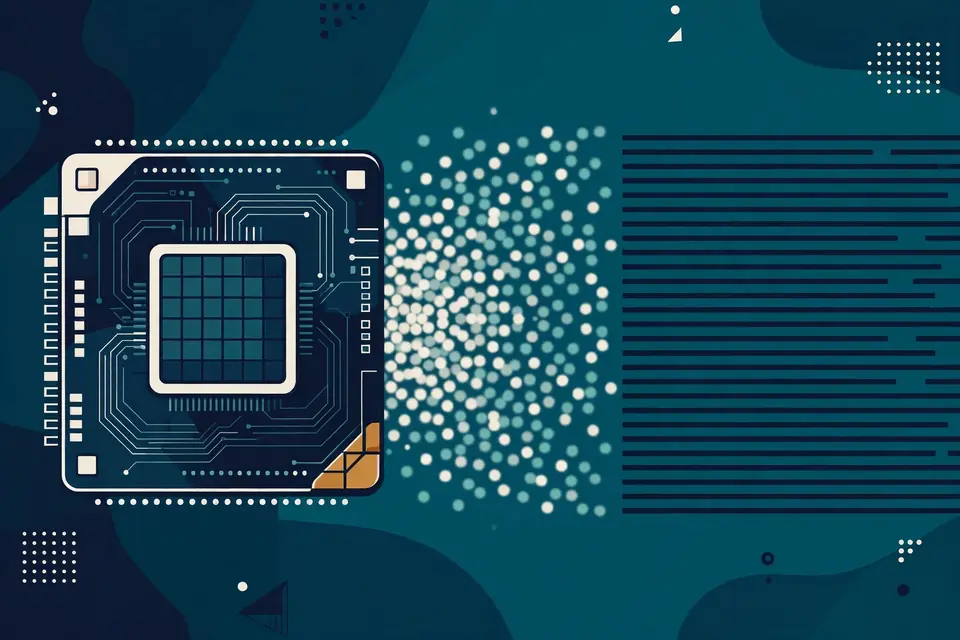
Illustration: a GPU chip beside text resolving out of scattered dots, the diffusion effect
Business & Funding

Nvidia nears a $500M deal for Inception, the diffusion-text startup

Nvidia is close to buying Inception, the two-year-old startup that writes text the way AI draws images, for at least $500 million, The Information reported on November 20. Most text models write one word at a time; Inception's models draft a whole answer and refine it in passes — the diffusion method behind AI image generators. Founders Stefano Ermon, Aditya Grover and Volodymyr Kuleshov, all professors, would join Nvidia full time, and the models would feed Nemotron, Nvidia's open model family. Talks began before Jensen Huang resigned and after Microsoft showed interest — with OpenAI and Anthropic designing their own chips, Nvidia is buying its way further into their business in return.

The Information via AI Field NotesNov 20 Source →
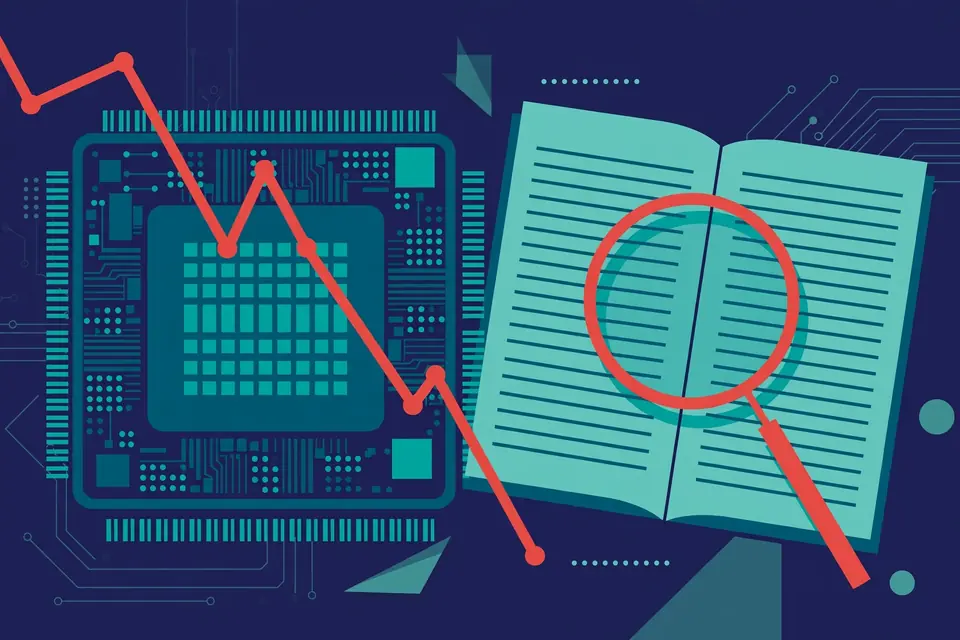
Illustration: a falling red stock chart over a GPU chip, with a magnifying glass over an accounting ledger
Policy & Chips

Nvidia sinks as Reuters reports an SEC accounting probe

A company that beat earnings and raised guidance on Tuesday has lost 46% of its value in seven weeks. Nvidia fell 14% on Friday, November 20, after Reuters reported, citing sources, that the Securities and Exchange Commission is examining potential accounting issues. It was the seventh straight weekly loss, the longest run since 2008, and about $2.6 trillion in market value is gone from the October 6 peak. Chief financial officer Colette Kress has been interim chief executive since Jensen Huang resigned on November 12. The stock now trades at roughly 8.4 times expected earnings, against about 29 for AMD. The chips are selling fine — investors are marking down the people in charge of them.

Reuters via AI Field NotesNov 20 Source →
Illustration: a phone with chat bubbles inside a glowing shield, blocking a robotic eye outside
Agents & Safety

Signal blocks Siri and Gemini from reading your chats

End-to-end encryption protects a message in transit and does nothing once an AI assistant reads it off the screen. Signal said on November 20 that on iOS 27 it now blocks screenshots inside the app so Siri AI cannot capture conversations, and on Android it switches on its screen security setting when it detects an assistant such as Gemini Intelligence reading the display. On macOS it cannot reliably block anything and tells people to exclude Signal by hand. President Meredith Whittaker's post asks Apple, Google and Microsoft for a documented way for any app to opt out of agent access — Signal fenced off Microsoft Recall the same way in 2025, and the list keeps growing.

Signal · AI.infoNov 20 Source →
No matching stories in this issue — try another category or search term.

From the lab: papers that stood out

Picks from November 19, 2026 papers on arXiv — all preprints, not peer-reviewed unless noted

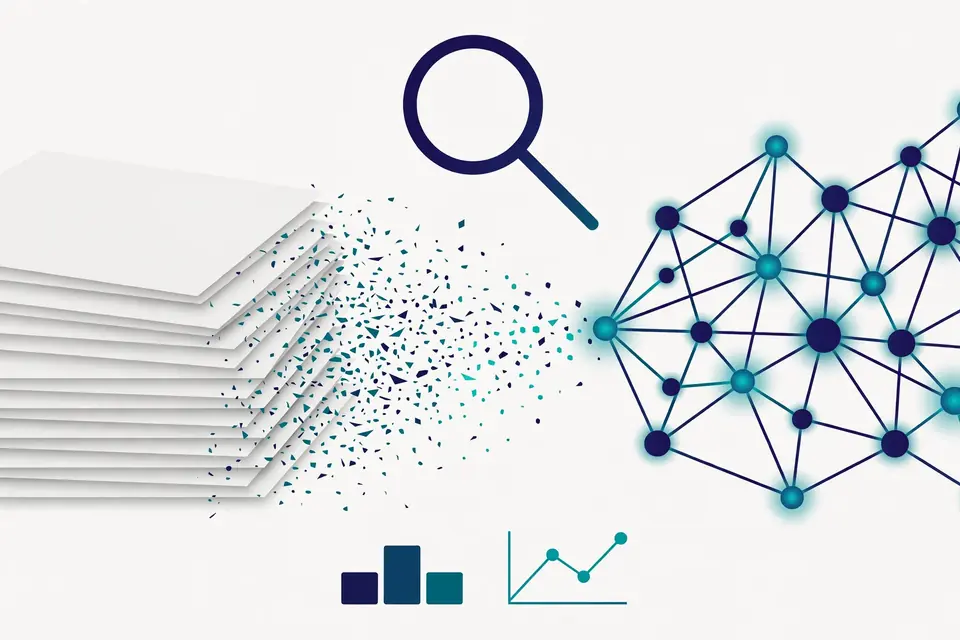
Illustration: a stack of research papers turning into a neural-network diagram

Realized versus Population Reliability — self-consistency certificates under correlated reasoning

Self-consistency certification treats repeated sampling as sequential evidence and stops when an anytime-valid e-process crosses a threshold — but it assumes sampled rollouts are independent, and in practice reasoning streams are positively correlated. The authors show the standard betting e-process stays valid only for a 'realized' null about the drawn belief, not the population null — and a prompt-level e-process restores population validity, with one rollout per prompt the optimal allocation under a pure rollout budget. Simulations and Claude Haiku 4.5 rollouts confirm the gap: on AIME, the single-unit rule crosses on 24% of prompts at a nominal 5% error rate.

arXiv:2611.26592Source →

Probing the 'Conscious' Mind — global workspace theory in vision-language models

Do vision-language models select information into a shared workspace the way global workspace theory says brains do? The authors introduce MC-Lens, a multimodal Jacobian lens that maps intermediate states to a shared semantic space, and find concept information is readable in intermediate states and selectively accessible as tasks require — with reliable selective access developing later than concept accessibility, and shared patterns across VLM families and sizes.

arXiv:2611.26590Source →

Verify the Verifier — LLM cross-checking catches bugs that pass every test

A passing chip regression shows the design agrees with the reference model on what the scoreboard checks — not that it meets the specification. The authors present the first framework whose LLM-based Anomaly Cross-Checker examines a passing regression's traces against the specification: of 564 bugs inserted into four OpenTitan IPs, 68 were candidate 'scoreboard escapes' — exercised by the tests yet passing — and the framework confirmed 41 of them, with assertions failing on the buggy design and proven on the original.

arXiv:2611.26588Source →

GEOHunter — mapping a paid network gaming AI search answers

Generative engines synthesize retrieved pages into answers — and optimization services sell visibility in those answers by publishing promotional articles on user-generated-content platforms. The authors measure one such operation across three major Chinese platforms, uncovering 1,985 accounts and 466,357 inferred promotional placements. Across nine generative engines from the US and China, 4.5% to 20% of retrievable cited pages trace to the network, and on eight engines its clients are named in 52% of answers, against 68% for category leaders.

arXiv:2611.26564Source →

ROGUE-AI — rebuilding real agent disasters to find what actually caused them

LLM agents can now delete files and send payments for their users, and news reports describe their failures — but rarely validate the incident or find its root cause. ROGUE-AI rebuilds each reported incident offline, together with a matched control lacking only the blamed cause, and reproduces the reported harm in 89% of 108 attempted replications. Agents built on five current GPT, Claude, Gemini and DeepSeek models made the reported mistake in 18% to 33% of runs, against at most 1% without the blamed cause — and of 72 incidents with real-world harm, 62 had no attacker at all: the agent did what its task asked for but missed an ordinary hazard.


arXiv:2611.26553Source →

On GitHub: top-rated AI repos & useful new finds

Star snapshot Nov 21, 2026 via GitHub search & Trending — stars measure attention, not quality alone; check recent activity before you rely on a repo

Most-starred — the established toolkit

★ 187,793Go · MIT

Run large models locally with one command — Kimi, DeepSeek, Qwen, Gemma and more, no cloud needed.

Why it matters: The default way developers run models on their own machines.

★ 169,336Python · Apache-2.0

The reference library for state-of-the-art models across text, vision, audio and multimodal tasks.

Why it matters: If you fine-tune or ship models, you will almost certainly touch this code.

★ 159,188Svelte

A friendly, self-hosted chat interface that works with Ollama and OpenAI-compatible APIs.

Why it matters: A ChatGPT-style front end for your own models, on your own server.

★ 149,987Python · MIT

The agent engineering platform for building LLM applications and workflows.

Why it matters: One of the most-used starting points for agent apps.

Rising this month — new & worth a look

★ 14,755Trending todayPython

A Claude Code skill bundle for bug hunting and external red-team work — 82 skills, 15 slash commands and 681 disclosed-report patterns across 24 vulnerability classes.

Why it matters: Red-teaming is becoming a skill pack, not a side project.

★ 323,012Trending todayShell

An agentic skills framework and software development methodology that works — today's most-starred trending repo.

Why it matters: Skills, not prompts, are becoming the unit of agent capability.

★ 61,584Trending todayPython

'Making ALL software agent-native' — a hub for turning command-line tools into agent-callable interfaces.

Why it matters: If every CLI becomes agent-native, agents stop needing bespoke integrations.

★ 67,834Trending todayPython

Train your own 64M-parameter LLM from scratch in about two hours — a hands-on route into how models actually learn.

Why it matters: Small models you can train yourself are the best way to learn the craft.

Join the experiment

This edition is deliberately lightweight — just two channels

Researcher? Feature your paper

In this pilot edition, papers are reviewed manually before appearing in the "From the lab" section. Send your paper's link (arXiv or PDF) and a two-line summary, and we'll add suitable ones to the next issue with a link to the original source — listing here is a summary and a pointer, not a substitute for research repositories.

The button opens your mail app with a ready message to the site team — nothing is stored on a server.

The newsletter

One lightweight issue summarizing the day's top AI news and research. In this pilot, subscribing happens by direct email — no databases, no tracking.

Your mail app will open with a ready subscription message to contact@arxivai.com.

Why a lightweight edition?

Because the goal is to test the idea and the readers first: one fast page, sources cited with their links, and no promises beyond what a pilot can deliver. If the test succeeds, daily coverage expands gradually.